







I used to think building a positive mindset meant trying to “stay positive” no matter what. Smile more. Complain less. Push through. But that version never lasted. The first real setback was a missed opportunity, a difficult client, a financial scare, and the optimism collapsed.
What I learned over time is this: building a positive mindset isn’t about constant cheerfulness. It’s structured mental training, uncomfortable self-awareness, and catching your thoughts in the act and refusing to let them run your life unchecked. And when done right, it sticks even when things don’t go your way.
Building A Positive Mindset Is Not Toxic Positivity

There’s a big difference between resilience and denial. Toxic positivity tells you to ignore pain. A durable mindset does the opposite; it asks you to examine it.
Mental health research from institutions like Mayo Clinic emphasizes that positive thinking isn’t blind optimism. It’s learning to respond to challenges constructively. You don’t pretend adversity doesn’t exist. You change how you interpret it.
For example, in high-pressure work environments, tight deadlines, quarterly targets, and performance reviews, the instinct is often catastrophic thinking: If I mess this up, everything falls apart. That’s not reality. That’s a cognitive distortion.
And that’s where the real work begins.
Rewiring Cognitive Habits
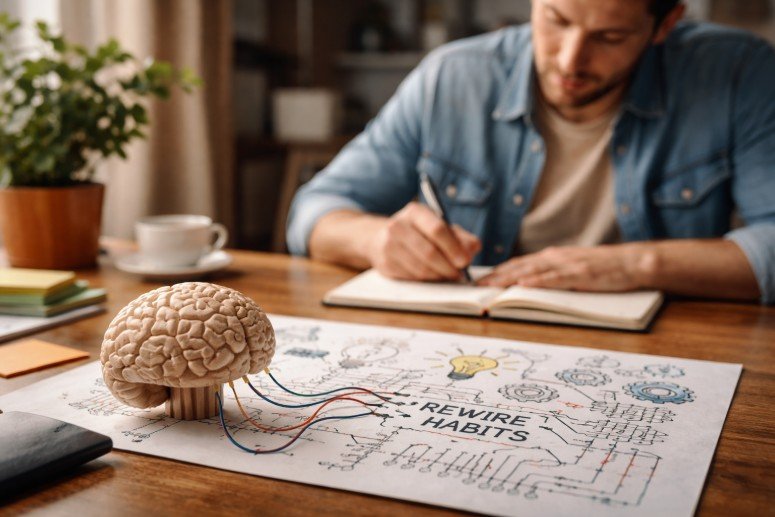
Most negative thinking patterns are automatic. They happen fast. They feel true. But they’re often distorted.
Common distortions include:
- Catastrophizing – expecting the worst possible outcome
- Filtering – focusing only on what went wrong
- Overgeneralizing – turning one mistake into a lifelong identity
The process of cognitive restructuring, widely used in cognitive behavioral therapy, teaches you to challenge these thoughts.
Instead of accepting:
“I always mess up.”
You ask:
What’s the evidence?
Have I succeeded before?
Is this one event defining my entire ability?
This simple pause disrupts emotional spirals. Psychologists often use the ABC Model:
- Adversity – What happened?
- Belief – What story did I tell myself about it?
- Consequence – How did that belief make me feel or act?
When you dispute irrational beliefs, the emotional consequence changes. Over time, this strengthens emotional well-being and resilience.
Another underrated tool is thought stopping. A physical cue, such as saying “Stop” internally or snapping a rubber band, interrupts rumination before it gains momentum. It sounds simple. It works because it creates space between stimulus and reaction.
That space is where building a positive mindset actually happens.
Leveraging Neuroplasticity To Your Advantage

Your brain isn’t fixed. It rewires based on repetition. This is called neuroplasticity.
Institutions like The College of Health Care Professions highlight that repeated thought patterns physically strengthen neural pathways. If you rehearse negativity, you get faster at it. If you rehearse constructive reframing, that pathway strengthens instead.
One of the most effective methods here is habit stacking, popularized by behavior expert James Clear. The idea is simple: attach a new mindset habit to an existing routine.
After pouring morning coffee → write three specific things you’re grateful for.
After shutting down your laptop → list one thing that went well that day.
A consistent gratitude practice retrains your brain’s threat-detection system. Instead of scanning for what might go wrong, it starts scanning for what’s working.
Research from Harvard Health Publishing supports this. Positive emotions broaden your thinking patterns. This aligns with the broaden-and-build theory, developed by psychologist Barbara Fredrickson, which suggests positive emotions expand your ability to see possibilities and build long-term resilience.
In practical terms?
When your mindset widens, your decision-making improves. You become less reactive. More strategic. Less defensive. More solution-oriented.
That’s not fluff. That’s cognitive training.
Daily Maintenance: The Unsexy Work That Makes It Stick

A positive mindset is a mental muscle. And muscles atrophy without use.
There are three maintenance layers most people ignore:
1. Environmental Control
Limit exposure to constant negative media cycles. Curate your inputs. The people you surround yourself with matter. Emotional states are contagious. A supportive environment strengthens positive mindset strategies far more than willpower alone.
2. Mindfulness And Presence
Techniques like 4-7-8 breathing or the STOP method (Stop, Take a breath, Observe, Proceed) prevent your mind from drifting into future anxiety or past regret. Mindfulness techniques reduce stress reactivity, increase emotional regulation, and helps to find clarity in life.
3. Physical Foundations
Sleep deprivation amplifies negativity bias. Poor diet affects mood regulation. Sedentary routines lower resilience to stress. Regular exercise, consistent sleep, and balanced nutrition are not “wellness trends.” They are cognitive stability tools.
The benefits of positive thinking aren’t abstract. They are biological.
When your nervous system is regulated, your thinking becomes clearer. And clear thinking supports better beliefs.
Why Building A Positive Mindset Is Harder Than It Sounds?

Because it requires consistency without immediate reward.
The first week of reframing thoughts feels forced. Gratitude journaling feels mechanical. Thought-stopping feels awkward.
But repetition builds strength.
Building a positive mindset that lasts requires:
- Awareness of automatic thoughts
- Logical disputation of distortions
- Repetition of constructive alternatives
- Daily reinforcement through habits
Over time, optimism shifts from effortful to automatic.
That’s when it becomes sustainable.
Frequently Asked Questions
1. How long does building a positive mindset take?
There’s no fixed timeline. With consistent cognitive restructuring and daily habits, noticeable shifts can occur within a few weeks. Big, automatic change often takes several months of repetition.
2. Is positive thinking the same as ignoring problems?
No. Effective positive thinking involves acknowledging challenges while choosing constructive interpretations and solutions instead of catastrophic assumptions.
3. Can neuroplasticity really change negative thinking patterns?
Yes. Repeated mental habits strengthen neural pathways. Consistently practicing gratitude, reframing, and mindfulness can gradually rewire automatic thought responses.
4. What is the most effective daily habit for positivity?
Gratitude practice combined with cognitive reframing tends to produce strong results. When paired with good sleep and exercise, the impact increases significantly.
Final Thoughts
The real work behind building a positive mindset isn’t glamorous. It’s structured, repetitive, and sometimes uncomfortable. It requires examining your own thinking patterns with honesty. It demands that you take responsibility for interpretations instead of blaming circumstances. But the payoff is stability, not surface-level happiness, but grounded resilience. The kind that holds steady during layoffs, relationship strain, health scares, and everyday stress.
And once that mental muscle strengthens, you don’t need to force positivity anymore. It becomes your default response.