





The Best Materials to Consider for a Durable and Stylish Shower Installation
The shower style today requires form and function to complement each other in a way that is sustainable in the long run. Given that showers come into contact with water and highly potent cleaners daily, it is important to choose the right material that goes beyond aesthetics. In choosing the wrong material, cracked grout, dirty molds, and, in some cases, expensive water leaks are bound to happen. There are too many options when it comes to porcelain tiles, stones, and even panels. For the safety and integrity of your home structure in the daily use of showers, you should employ the services of experts in this field. When you choose licensed bathroom shower installation services in gilbert, you know your high-quality materials will get good waterproofing and be put in the right way. 1. Porcelain Tile: The Ultimate Standard for Durability Porcelain is known as the best material for many new shower enclosures. It is produced through extreme heat. Porcelain tiles are heavy, and they are water-tight, so they can’t get stains on them. Porcelain is not like natural stone. It does not need sealing from time to time. It can stand up to strong cleaners. With new printing methods, porcelain can look a lot like the veins in Carrara marble. It can also look like the feel of white oak wood. This lets you get a rich look in your home, but you don’t have to deal with a lot of time and work to keep it looking good. 2. Natural Stone: Authentic Character and Organic Textures You could incorporate natural stones such as granite and marble in your shower room. Each stone has its own mineral patterns. This means your shower will stand out and not look like anyone else’s. But natural stone has small holes in it. To stop water from getting in, along with stains and soap buildup, you need to cover the stone with a good sealer when it is put in. You should do this again once each year. If you pick stone, go for a honed finish instead of a shiny one. A honed finish will help people not slip as much on wet shower floors. 3. Solid Surface Panels: Seamless, Grout-Free Luxury If you do not like to clean grout lines, solid surface wall panels—like engineered quartz or acrylic mixes—are a new way to handle this. The panels are cut to fit your shower walls very well. This will give you a smooth surface without any grout lines, so that there will be nothing to scrub. There are no holes in solid surfaces; hence, they are clean surfaces and prevent mold, mildew, or hard water spots from forming. Therefore, these products should be good to use when it comes to keeping your bathroom clean and tidy. These products should also be good to maintain because all you need to do is wipe your sink down on a weekly basis. Comparing Leading Shower Materials When making a decision, you also want to know how much it is you have to spend, what your lifestyle is, and your taste. Material Water Resistance Maintenance Level Aesthetics Best For Porcelain Tile Extremely High Very Low Highly Versatile Busy family bathrooms Natural Stone Moderate (Requires Sealing) High Luxurious, Unique Primary suites & dry zones Solid Surface High Extremely Low Sleek, Modern Low-maintenance minimalist designs 4. The Hidden Hero: Epoxy Grout In case you decide to go with tiles, then you must choose the correct grout. The grout is as important as the tile. Normal cement grout soaks up water and can crack or get stained. Many experts say it’s better to use epoxy grout. This type is made from resin and some other fillers, so it does not let water in. It is also very hard to stain and stays strong with chemicals. Because of their lack of flexibility, they also resist cracking and fading. This can result in clean-looking tiles for years to come. Conclusion Your shower can increase the value of your home while making everyday life more comfortable. You can choose durable materials such as porcelain tile, natural stone, or solid-surface panels and pair them with epoxy grout for better moisture resistance. Following a smart home setup guide can also help you add features such as digital shower controls, automated lighting, and water-saving technology. This approach creates a bathroom that looks attractive and remains in good condition for many years. When you are ready to begin your project, choose professional bathroom shower installation services in Gilbert. Experienced installers will provide proper waterproofing, accurate floor slopes, secure material placement, and clean, long-lasting workmanship.
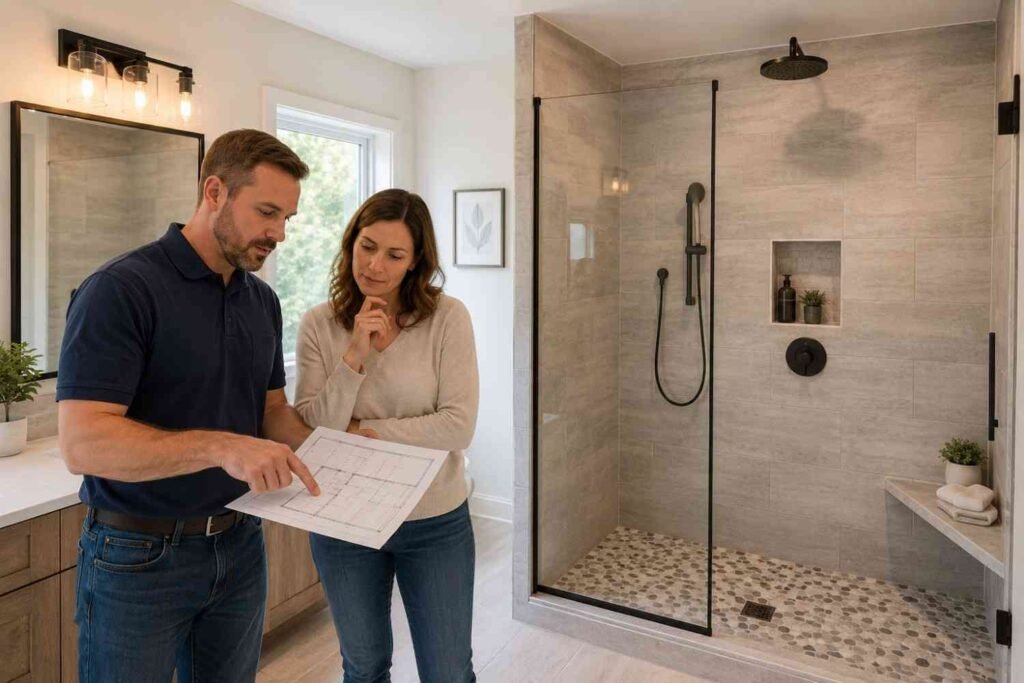
Walk-In Shower Planning Tips for Ogden Bathroom Remodels
Start With the Bathroom You Actually Have, Not the One You Wish You Had A good bathroom remodel starts with a realistic read on the existing space. That matters even more in an Ogden home, where bathrooms often need to balance older layouts, tighter footprints, and long-term usability. Before choosing tile or fixtures, the real question is whether the room can support the shower you want without creating avoidable tradeoffs. That is why the best walk-in shower projects in Ogden homes begin with layout, structure, and daily use. A shower that looks good on paper can still fail if the entry feels cramped, the door swing is awkward, or the new design steals storage from the rest of the room. Renovate Ease approaches the planning phase with that broader view, because the smartest remodel is rarely the flashiest one. A tub-to-shower conversion often becomes the right move when the homeowner wants a cleaner look, easier access, and less visual clutter. But the decision should be driven by how the bathroom functions now and how it needs to function five or ten years from now. That includes traffic flow, aging-in-place needs, and whether the room is expected to serve one person, a couple, or a growing household. The Details That Make a Walk-In Shower Work Long-Term A well-planned shower is less about a single feature and more about how several choices work together. Entry height, wall configuration, drainage, lighting, and built-in storage all affect how comfortable the shower feels day after day. If one of those elements is handled poorly, the whole room can feel less convenient than the old setup it replaced. Curbless and Low-Threshold Designs Solve Different Problems Curbless showers create a seamless visual transition and can make a bathroom feel larger and more open. They also reduce the physical barrier at the entrance, which is valuable for accessibility and for homeowners planning ahead. A low-threshold design offers many of the same benefits while sometimes fitting more easily into existing floor conditions. The key is not choosing the trendiest option. It is choosing the version that matches the bathroom’s structure. In some homes, curbless entry may require more floor adjustment or drainage planning. In others, a low-threshold layout gives the right blend of accessibility and practicality without overcomplicating the remodel. Renovate Ease helps homeowners compare those options early, before the design is locked in. Storage, Seating, and Fixtures Should Be Planned Together A shower feels finished when the everyday details are already solved. Recessed storage niche placement matters because it controls reach, clutter, and the overall wall layout. Bench seating can be helpful for comfort, shaving, or simply making the shower more versatile. Grab bars and handheld wands also need to be integrated with intention, not added as afterthoughts. A rainfall showerhead may be appealing, but it should not come at the expense of water coverage or practical control. The best designs think in layers: How the shower is entered Where products will be stored Whether seated use is likely How water will be contained and drained Which fixtures support daily routines Those are small decisions individually. Together, they define whether the shower feels custom or merely upgraded. Waterproofing and Code Compliance Are the Real Quality Test A bathroom remodel should not be judged only by what is visible on day one. The hidden work is where a shower either proves itself or becomes a future problem. Waterproofing, slope management, and proper membrane installation matter because water does not forgive shortcuts. In a shower remodel, the finish is only as strong as the layer behind it. Renovate Ease places an emphasis on precision waterproofing, including the use of high-quality systems such as Schluter-Kerdi membrane where appropriate. That kind of detail is not a luxury. It is the backbone of a durable installation. A well-built shower should resist leaks, help protect surrounding materials, and reduce the risk of moisture-related damage over time. Code compliance matters just as much. Permits, plumbing adjustments, and structural considerations can all affect how the remodel moves forward. In Weber, Davis, and Salt Lake Counties, that part of the process needs to be managed carefully so the project does not stall or create problems later. Renovate Ease handles those details locally, which helps keep the remodel organized and less stressful for the homeowner. Why Ogden Homeowners Should Think Beyond the Price The cheapest shower remodel is rarely the best value. A lower initial quote can look attractive until the homeowner starts dealing with maintenance, water issues, or a layout that no longer fits the household. The real measure of value is not just what the project costs today. It is how well the bathroom functions after the novelty wears off. That is especially true in an Ogden bathroom remodel, where homeowners often want a solution that will remain useful as needs change. A family may want a sleek modern look now, but later the priorities may shift toward safer entry, easier cleaning, or better comfort for guests. Renovate Ease builds around that long view, which is what separates a thoughtful remodel from a cosmetic one. There is also a maintenance angle that gets overlooked. Fewer seams, better surfaces, and a cleaner entry design usually mean less scrubbing and less long-term wear. That can matter as much as style. A shower that is easier to keep clean tends to stay looking new longer, which protects the investment without demanding constant upkeep. How Renovate Ease Turns Planning Into a Better Remodel The planning process should not feel like guesswork. Homeowners need a clear design conversation, a transparent quote, and a realistic sense of what the remodel involves before demolition starts. That is where Renovate Ease earns trust: by making the process organized, local, and specific to the home rather than generic to the internet. One advantage of working with a company like Renovate Ease is the flexibility to tailor the installation to the project’s actual scope. Some bathrooms may call for a faster, more streamlined approach. Others

How To Live A Meaningful Life In Your 20s, 30s, And Beyond?
I used to think meaning would just “click” one day. That I would wake up feeling certain about who I was, what I wanted, and where I was headed. Instead, my 20s felt like a series of experiments. My 30s felt like pruning. And the years after that? They started feeling less about achievement and more about contribution. If you’re wondering how to live a meaningful life in your 20s, 30s, and beyond, the answer changes with age. Not because your values disappear, but because your priorities evolve. Psychologists describe each decade as a different developmental phase. The challenge isn’t finding one grand purpose. It’s adjusting your focus as you grow. Why Meaning Changes As You Age Early adulthood centers on identity and intimacy. You ask: Who am I? Who do I choose? Later, the question becomes: What am I building? And eventually: What am I leaving behind? Research on psychosocial development shows that meaning shifts from exploration to commitment to contribution. In your 20s, you search, in your 30s, you refine, and in your 40s and beyond, you expand your impact. Trying to apply the same strategy at every age creates frustration. Living with intention means adapting your approach to your stage of life. Meaning In Your 20s: Exploration And Identity Your 20s are laboratory years. They are not optimization years. You are supposed to try things. Different jobs, cities, and routines. The goal is not to “lock in” success. The goal is to gather data about yourself. Embrace Experimentation Take roles that stretch you. Say yes to projects that scare you a little. View jobs as experiments rather than permanent identities. Every experience teaches you what energizes you and what drains you. That clarity becomes priceless later. Establish Health Foundations This decade is prime time for building physical resilience. Strength training, cardio, and whole-food nutrition compound over time. Small habits now prevent major health issues later. Think of your body as a retirement account. The earlier you invest, the greater the return. Build A Financial Baseline Even modest contributions to retirement accounts or index funds grow dramatically over decades due to compounding. Starting early reduces long-term stress. It also gives you options, and options create freedom. Develop Autonomy Living independently, managing your own bills, and making your own mistakes are experiences that build identity. Autonomy strengthens your sense of purpose because you start making authentic life choices instead of inherited ones. At this stage, your sense of purpose often feels fluid. That is normal. Exploration is not confusion. It is growth. Meaning In Your 30s: Focus And Commitment Your 30s usually feel different. The experimentation phase becomes tiring. You start craving depth instead of variety. This is where meaning shifts from expansion to refinement. Narrow Your Focus Instead of dabbling, identify your strongest skills. What work feels engaging instead of exhausting? Choose to deepen your expertise. Career growth becomes more intentional. You trade breadth for mastery. Deepen Intimacy Long-term partnerships, close friendships, and family commitments often solidify in this decade. Meaning increasingly comes from connection. Love becomes less about excitement and more about reliability, support, and shared growth. Aggressive Wealth Building Earning potential typically increases during this period. Paying down debt and maximizing retirement contributions reduces future pressure. Financial stability supports your larger life priorities and goals. Audit Your Habits Look closely at how you spend your time and attention. Some relationships, routines, or commitments may no longer align with your personal purpose and values. It takes courage to let go, but alignment fuels fulfillment. In your 30s, intentional living habits matter more than inspiration. Structure creates stability. Stability creates space for deeper meaning. Meaning In Your 40s And Beyond: Generativity And Legacy From your 40s onward, something subtle shifts. You begin thinking beyond personal success. You start thinking about impact. Psychologists describe this phase as “generativity versus stagnation.” Fulfillment comes from guiding others and contributing to something larger than yourself. Practice Generativity Mentor younger colleagues. Volunteer. Teach. Share knowledge. Contribution creates a powerful sense of purpose because it extends your influence beyond your own timeline. Reconcile And Reflect Midlife often brings reflection. You reassess values. You become aware of mortality. Instead of triggering panic, this awareness can sharpen clarity. You focus on what truly matters. Become A Keeper Of Meaning Passing down traditions, skills, and stories preserves continuity. Whether through family, community work, or leadership, you ensure your accumulated wisdom does not disappear. Achieve Integrity Later adulthood brings deep reflection. When you look back with pride, you experience integrity. When regrets dominate, despair can surface. Living intentionally now shapes how you will feel decades from today. Meaning in this stage is less about achievement and more about contribution. Core Strategies That Apply At Every Age No matter your decade, certain life fulfillment strategies remain constant. Prioritize attention over time. Guard your focus. Quit what drains you. Commit to continuous learning. Growth prevents stagnation. Manage stress actively through exercise, mindfulness, and recovery. Protect meaningful relationships. Community anchors identity. These habits create a foundation for a sustainable personal growth journey. How To Live A Meaningful Life Without Burning Out Many people confuse meaning with nonstop productivity. They chase goals relentlessly, believing exhaustion equals purpose. It doesn’t. Living with intention requires boundaries. Rest is not laziness. Reflection is not wasted time. Meaning grows in space, not chaos. If you constantly feel overwhelmed, your life priorities and goals may need adjustment. Always focus on how to simplify your life and remove what does not align with your authentic values. Clarity reduces burnout. FAQs 1. How Do I Know If My Life Is Meaningful? A meaningful life feels aligned. Your actions reflect your personal purpose and values. You feel connected to others. Even challenges feel worthwhile because they serve something larger. 2. Is It Too Late To Start Living A Meaningful Life? No. Meaning evolves. Whether you are 25 or 65, you can realign your habits, relationships, and goals. Contribution and growth remain available at every stage. 3. Does Money Make

How To Find Clarity In Life Without Waiting For The “Perfect” Moment?
There was a time when I believed clarity would arrive like a lightning bolt. One powerful realization, a perfect morning, and a sign that everything finally made sense. It never happened that way. What actually changed my direction wasn’t certainty; it was movement. If you’re searching for how to find clarity in life, you’re probably tired of overthinking, second-guessing, and waiting to feel “ready.” The truth is simple but uncomfortable: clarity is rarely something you wait for. It’s something you create. And it usually shows up after you take action, not before. Why Waiting For The Perfect Moment Keeps You Stuck Most people assume clarity comes first, then action follows. In reality, it’s the opposite. You act, you learn, you adjust, and that process sharpens your direction. Think about career changes. Few professionals wake up absolutely certain about switching industries. They take a course. Talk to someone in the field. Try a side project. Each step reduces fog. That’s how decision making with clarity develops through feedback. Waiting for a flawless plan often leads to analysis paralysis. Research in behavioral psychology consistently shows that excessive rumination increases anxiety and reduces confidence. Overthinking feels productive, but it rarely produces momentum. Clarity through action is far more reliable than clarity through endless contemplation. Shift From Thinking To Doing Clarity is like driving through fog at night. You can’t see the whole road. But as the car moves, more becomes visible. Instead of trying to map the next decade, focus on small, deliberate steps. Take messy action. Start before you feel fully prepared. Real-world feedback teaches faster than mental rehearsal. Choose the next right step. Not the perfect step. Just the next one. Build momentum with small wins. Momentum reduces anxiety more effectively than prolonged analysis. This is one of the most practical steps to gain clarity. Action exposes what excites you, what drains you, and what needs adjustment. Thinking alone cannot do that. If you want ways to find direction in life, begin by shrinking the time between idea and execution. Even sending one email or scheduling one conversation can change your internal state from stuck to moving. Declutter Your Mind Before You Redesign Your Life Mental clarity often isn’t missing; it’s buried under noise. External opinions. Social comparison. Too many options. Endless digital input. All of it clouds judgment. Start by decluttering both mentally and physically. Do a brain dump. Write every worry, task, and idea onto paper. Don’t organize it yet. This clears cognitive overload. Limit your options. Reduce big decisions to five choices or fewer. Too many options increase dissatisfaction and indecision. Simplify your environment. Clean one small area of your desk, your car, or your kitchen counter. Physical order often triggers mental order. Professionals in high-performance teams often use structured planning systems to reduce mental clutter. When your mind isn’t juggling dozens of open loops, it can actually evaluate what matters. If you’re trying to stop overthinking and find clarity, remove excess input before you demand deeper insight from yourself. Practice Active Reflection, Not Passive Waiting Reflection is powerful. Passive rumination is not. There’s a difference between endlessly replaying scenarios and intentionally examining your values. Structured self-reflection methods help separate fear from truth. One powerful exercise is defining your anti-goals. If you’re unsure what you want, list what you absolutely don’t want. What drains you? What kind of lifestyle feels suffocating? Eliminating misalignment makes aligned choices clearer. Another exercise is imagining your own eulogy. It sounds dramatic, but it forces perspective. How do you want to be remembered? What kind of presence, impact, or character would matter most? That lens simplifies priorities quickly. You can also set time limits for decisions. Give yourself ten focused minutes. Or a firm deadline. Deadlines reduce emotional spiraling and push you toward decision-making with clarity. Mental clarity grows when reflection has boundaries. Optimize Your Clarity Triggers Your ability to think clearly is influenced by physical and social factors more than you realize. Sleep quality directly impacts decision-making ability and emotional regulation. When you’re exhausted, everything feels urgent and confusing. When rested, priorities sharpen. Brief periods of stillness, even five minutes without screens, allow your brain to reorganize thoughts. Many leaders and creatives protect silent time for this reason. Your social circle also matters. If you constantly absorb negativity or indecision from others, your own direction weakens. Spend more time with people who act decisively and take responsibility. Nature helps, too. Walking outdoors reduces stress hormones and restores cognitive function. Some of the clearest ideas come during a simple walk, not a strategy session. The Truth About Certainty Here’s something most people don’t say: certainty is overrated. You don’t need 100 percent confidence to move forward. You need enough clarity to take one step. After that step, clarity expands. Then another step. Then another. Purpose versus goals often gets confused. Goals are specific outcomes, and it is always important to stop feeling stuck in life. Purpose is a broader direction. You may not know your ultimate purpose yet, but you can move toward growth, contribution, learning, or stability. Those directional anchors are enough. When you ask how to find clarity in life, you’re often asking for guarantees. But life doesn’t offer guarantees. It offers feedback. Clarity doesn’t come from waiting for the perfect moment. It comes from creating imperfect momentum. Frequently Asked Questions 1. How long does it take to find clarity in life? Clarity is not a one-time event. It develops in layers. Some decisions become clearer within days when you take action. Bigger life direction shifts may take months of experimentation and reflection. 2. Can journaling really improve mental clarity? Yes. Journaling for clarity helps externalize thoughts, reduce emotional overload, and organize priorities. Writing slows down thinking and makes patterns visible. 3. Why do I feel stuck even when I think a lot? Overthinking creates the illusion of progress. Without action or structured reflection, thoughts loop without resolution. Movement breaks the loop. 4. Is it normal to lack clarity in

How to Build a Capsule Wardrobe on a Budget: My Simple Closet Reset That Actually Works
A few years ago, I stood in front of a closet packed with clothes and still felt like I had nothing to wear. Shirts hid behind dresses I never touched. Jeans stacked on the shelf but somehow never felt right. That moment pushed me to learn how to build a capsule wardrobe on a budget, and it completely changed how I approach clothing. Instead of buying more, I focused on using what I already owned and adding only pieces that worked together. The result felt surprisingly freeing. My closet looked cleaner, my mornings became easier, and my spending dropped dramatically. If you want a wardrobe that feels stylish, practical, and affordable, learning how to build a capsule wardrobe on a budget can completely reset your relationship with clothes. Why Does Learning How to Build a Capsule Wardrobe on a Budget Make Life Easier? When I simplified my wardrobe, I noticed something unexpected. My mornings became calmer. I stopped wasting time searching for outfits because almost everything matched. A capsule wardrobe focuses on versatile basics rather than endless options. Neutral colors mix easily, and a smaller set of clothing creates dozens of outfit combinations. Money savings also surprised me. Instead of impulse shopping, I began making intentional purchases as a realistic self-improvement lifestyle. Understanding how to build a capsule wardrobe on a budget helped me stop buying trendy pieces that only worked for one season. The biggest benefit felt mental. My closet stopped feeling chaotic and started feeling purposeful. What Clothes Should You Keep When Learning How to Build a Capsule Wardrobe on a Budget? The first step never involves shopping. I started by auditing my closet and evaluating every item honestly. I pulled everything out and placed items into three piles: keep, donate, and repair. Only pieces that fit well, felt comfortable, and matched my personal style stayed. When I researched how to build a capsule wardrobe on a budget, I noticed that most capsules rely on timeless basics rather than fashion trends. Typical starter pieces include simple items that mix easily. Category Examples Tops Plain T-shirts, white button-down, neutral blouse Bottoms Straight-fit jeans, tailored trousers Layers Cardigan, blazer, lightweight jacket Shoes Neutral sneakers, one dressy pair These pieces form the backbone of a capsule wardrobe because they create many outfit combinations. How Do Neutral Colors Help When You Learn How to Build a Capsule Wardrobe on a Budget? Color coordination changed everything for me. Before I understood how to build a capsule wardrobe on a budget, my closet contained random colors that rarely worked together. After switching to a consistent palette, outfit planning became almost effortless. Most capsule wardrobes rely on 3–5 neutral colors such as black, white, navy, grey, or beige. These shades blend easily and rarely clash. I added one or two accent colors for personality. A soft green sweater and a burgundy scarf kept things interesting without disrupting the mix-and-match system. This small adjustment allowed almost every item in my closet to work together. How Do Smart Shopping Habits Support How to Build a Capsule Wardrobe on a Budget? Once I cleaned out my closet, I shifted my focus toward smarter shopping habits. One rule changed everything: I never bought clothing unless it paired with at least three items already in my wardrobe. I call this my “three-outfit rule.” Secondhand shopping also helped enormously. Thrift stores and resale platforms offer quality clothing at a fraction of retail prices. I often find durable pieces that last longer than fast-fashion items. Timing purchases also makes a huge difference. Winter coats often drop 50 percent or more by late winter. Summer clothing becomes cheaper in early fall. These habits support the core idea behind how to build a capsule wardrobe on a budget: buy fewer pieces, but buy better ones. What Capsule Wardrobe Formulas Make Planning Easier? Structured wardrobe formulas helped me stay organized while building my capsule. One beginner-friendly method uses the 3-3-3 rule. You choose three tops, three bottoms, and three pairs of shoes. Those nine items can create dozens of outfits. Another helpful system follows the 5-4-3-2-1 method. Item Type Quantity Tops 5 Bottoms 4 Layers 3 Shoes 2 Statement accessory 1 These frameworks keep wardrobes manageable while still offering plenty of outfit combinations. How to Build a Capsule Wardrobe on a Budget Step by Step Step 1: Empty Your Closet Completely I started by removing everything from my closet. Seeing all my clothing at once helped me identify duplicates and items I never wore. Sorting pieces into keep, donate, and repair categories created instant clarity. Step 2: Identify Your Core Essentials Next, I focused on foundational pieces. Neutral T-shirts, jeans, simple blouses, and versatile jackets formed the base of my wardrobe. These basics create the most outfit combinations. Step 3: Choose a Consistent Color Palette A small color palette keeps your wardrobe cohesive. I chose black, white, navy, and beige as my base colors and added one accent shade. Step 4: Fill Gaps Slowly Instead of buying everything at once, I replaced missing essentials gradually. Setting a monthly clothing budget kept my spending under control. Step 5: Follow the Cost-Per-Wear Rule I now ask one simple question before buying anything: How often will I wear this? If the item works with multiple outfits and lasts for years, it earns a place in my wardrobe. How Does Organization Help Maintain a Capsule Wardrobe? Once I simplified my wardrobe, organization became much easier. I keep my closet arranged by category and color. Shirts hang together, jackets stay grouped, and pants remain folded on a single shelf. Storage organizers also help maintain structure. Stackable closet bins, drawer dividers, and foldable wardrobe shelves keep everything visible and accessible. When clothes stay organized, your capsule wardrobe stays functional. Key Takeaways Principle Why It Works Focus on neutral colors Easier outfit combinations Buy versatile basics More outfits with fewer pieces Shop secondhand High quality for lower prices Use cost-per-wear thinking Long-term savings Keep wardrobe organized Maintains simplicity Frequently Asked Questions













How Remote Monitoring Supports Multi-Site Business Security
Managing security at several places can be hard for many businesses. Retail stores and other locations face real-world risks that do not wait until your staff is there. Old security setups take care of local threats but miss things in other areas. This leads to slow answers and more money spent. A central, remote system can change how you manage this. When you use cloud-based cameras, smart devices, and AI-powered video tools, your security can come together in one dashboard. You can act before trouble happens and keep every site safe, all day and night, without paying for guards at each door. If you want to see how these smart systems can connect with what you already have, learn more. Centralized Visibility: Eradicating Multi-Site Blind Spots For businesses that work in many places, it is hard to watch every site. Remote monitoring helps by letting you look at everything in one digital spot. You do not have to use old CCTV systems at each branch. The decision-makers can see live, clear video on one safe cloud platform. Because these platforms may store footage, access logs, and personal information from several locations, businesses should review data privacy laws in the US 2026 update before deciding how security data will be collected, retained, shared, and protected. This central system makes sure security teams have a full view of everything at once. It does not matter if you handle five locations or fifty. Centralized visibility eliminates the limitations between locations and makes sure that all your policies are consistent at all times. Proactive Threat Detection with AI-Powered Video Analytics Modern remote monitoring is not just about recording things. It uses smart edge devices and AI to spot unusual things. These systems alert people to getting in without permission, tailgating at the door, or strange actions when it’s late. Instead of looking through old videos after a break-in happens, automated real-time alerts are sent right away to virtual monitoring centers or local officials. This change helps people act faster and cut down on the time it takes to respond. It also helps make sure less property gets damaged. Substantial Cost Savings and Operational Efficiency Having security guards at every location all the time is too expensive for most growing businesses. Remote monitoring provides a good way to save money with virtual patrolling. A remote security expert can watch many cameras. They can be in different areas at the same time. This helps to lower costs and improve security. Smart systems also help cut down on false alarms. They check for problems with video before calling emergency services. This saves businesses money and keeps them from having to pay city fines. Seamless Scalability for Growing Business Footprints As your business grows, your security setup needs to be easy to update. When you open new locations with a usual security system, you have to install servers at the place. You need special devices. The setup at each site has to be different. Cloud-based remote monitoring gets around these problems. These platforms are part of the broader range of technology tools that simplify life by allowing business owners to manage cameras, alerts, access systems, and multiple locations from one central dashboard. New IP cameras, entry systems, and IoT sensors can be set up and added to your main management platform in just a few minutes. This way, all your new branches will be as secure as your other sites, quickly, and your normal work will not be disturbed. Strengthening Multi-Site Protection To grow in today’s fast-moving business world, modern companies need to change from separate security systems to joined, remote-first setups. Remote monitoring gives the best mix of good sight, quick reactions, and it saves money too. If you want to improve your company’s safety plan and keep your things safe in an easy way, learn more about custom business security setups today. FAQs 1. How does remote monitoring prevent false alarms? Remote monitoring systems use AI to check video. When a sensor goes off, the system looks at the live video. It tries to find out if there is a real threat, like someone breaking in or just an animal. The system checks before telling emergency contacts or calling the police. 2. Can remote monitoring integrate with my existing security cameras? Yes. Today, many remote monitoring systems can work with any camera. They use adapters that help you use both older and newer cameras. This means a business can keep the cameras it already has, instead of having to buy all new ones. 3. Is remote monitoring secure from cyber threats? Top remote monitoring providers use end-to-end encryption. They also use multi-factor authentication, called MFA. These companies send out routine firmware updates automatically. They do this to make sure that video feeds and logging remain safe from people trying to break in online.


How to Create a Business Plan Step by Step?
The first time I wrote a business plan, I treated it like homework. I opened a blank doc, typed a fancy title, and immediately started… avoiding it by “researching” snacks in my pantry. Then I realized something: how to create a business plan step by step gets way easier when you stop trying to sound like a corporate robot and start treating it like a real-life roadmap you can actually follow on a Tuesday morning. I write business plans the same way I build routines—one small, honest section at a time. And if you want funding, your plan needs to feel “diligence-ready,” meaning it must prove your business can scale, control risk, and reach profit without relying on vibes. How to create a business plan step by step when you only have an idea and caffeine? I start by picking a simple promise: “This plan will make my business easier to run.” If you keep that goal, you won’t overcomplicate the process or fill pages with fluff that nobody reads. A strong plan usually lands around 12–20 pages for investors. That range forces focus. You show proof, unit economics, and a realistic path to profitability instead of a long motivational essay. Here’s the mindset shift that changed everything for me: a business plan isn’t a dream journal. It’s a decision tool. You use it to decide what you sell, who you sell to, how you sell, and when the business finally pays you back. How to create a business plan step by step using the “investor lens” (even if you’re self-funding) Whether you want a bank loan, angel funding, or you just want to stop guessing, think like an investor for a minute. Investors back outcomes. They look for evidence, not enthusiasm. They also care about two big things you can control: your team and your numbers. That’s why the “Company & Team” section matters so much. People say investors “back the jockey, not the horse,” and honestly… I get it. A solid operator can rescue an average idea, but a messy operator can sink a great one. This investor lens also pushes you to include the essentials: a clear market size model (TAM/SAM/SOM), a real competitive moat, traction proof, and an “audit trail” of financial projections that makes sense line by line. What sections should you include to make how to create a business plan step by step actually work? Most traditional business plans follow a familiar structure, and it works because it answers investor questions in order. I use the core framework below every time, and I keep it clean so it reads fast. Business Plan Sections That Matter Most Section What it proves What I include Executive Summary Why this business deserves attention Problem, solution, moat, traction, funding ask Company Description What you do and why it matters Mission, customers, value, positioning Company & Team You can execute Team bios, legal structure, cap table (if relevant) Market Analysis Demand exists Trends, demographics, TAM/SAM/SOM Competition You can win Competitor map + your “unfair advantage” Product/Service The offer works Benefits, lifecycle, IP, USP Marketing & Sales You can acquire customers Channels, pricing, funnel, retention plan Operating Plan You can deliver Process, tools, inventory, location Financial Projections You can profit P&L, cash flow, balance sheet, break-even, CAC/LTV Funding Request You know what money does Amount, instrument, use-of-funds, milestones, exit paths Appendix You have receipts CVs, contracts, research, screenshots, LOIs That table keeps me honest. If a section doesn’t prove something, I tighten it. Your goal is clarity, not length. How do I write an Executive Summary that gets read instead of ignored? I write the Executive Summary last, every single time. If I write it first, I end up summarizing a plan that doesn’t exist yet, and then I spend days trying to force the plan to match my early guesses. A strong Executive Summary fits on one page and includes a punchy one-liner about the problem you solve. Then I add what I call the “three investor comforts”: your moat (unfair advantage), proof you can execute, and how you reach profitability. If you want funding, don’t act shy here. State your funding ask clearly and explain what it unlocks. Investors should finish the summary and know whether to take a meeting—without hunting for basic details. How do I prove my market and competition without saying “it’s a billion-dollar industry”? I’ve seen too many plans use the phrase “huge market opportunity” like it magically creates customers. Instead, I use TAM/SAM/SOM because it forces realistic thinking. TAM shows the total revenue opportunity in the world. SAM narrows it to the segment you can actually serve. SOM keeps you grounded by estimating what you can capture in the short term with your resources. Then I talk about competition like an adult. I list top competitors, what they do well, where they fall short, and why customers would choose me. This is where you explain your moat—patents, proprietary tech, exclusive distribution, partnerships, brand trust, or a workflow advantage that competitors can’t copy quickly. How do I make the financial section feel real (and not like a random spreadsheet)? When I build financial projections, I treat them like an “audit trail.” I want someone to follow the logic and say, “Okay, that checks out.” I forecast 3–5 years, and I add monthly detail for the first 24 months if I’m pitching investors or lenders. I include projected P&L, cash flow, and a balance sheet. I also add a break-even analysis because it answers the most emotionally important question: “When does this thing stop eating money?” If you want to look truly scalable, you need unit economics. I always define CAC (Customer Acquisition Cost) and LTV (Lifetime Value) in plain English, then show how they improve over time. If LTV doesn’t beat CAC in a believable way, the plan needs work before the business needs funding. How to create a business plan step by step with a simple “How-To” routine you can repeat I

Low Cost Business Ideas With High Profit: My Practical Guide to Starting Small and Earning Big
I remember the moment I started searching for low cost business ideas with high profit. I sat at my kitchen table early one Saturday morning with coffee in hand and a notebook full of ideas. I wanted something realistic. No giant loans. No fancy office. Just a smart way to build income from skills and everyday tools. Many people imagine entrepreneurship requires thousands of dollars. My experience proved the opposite. Some of the most profitable businesses start from a laptop, a phone, and a clear plan. Over time I experimented with small projects, freelance work, and digital services. I learned a simple truth: the businesses that grow fastest focus on skills, digital platforms, or local services people already need. When you keep expenses low, profits become easier to reach. Today I still recommend low cost business ideas with high profit to friends who want more freedom in their schedule and income. Why Do Low Cost Business Ideas With High Profit Work So Well? Most profitable small businesses avoid heavy overhead. They do not rely on inventory, warehouses, or expensive storefronts. Instead they depend on skills, knowledge, and demand. When I started researching business models, I noticed a clear pattern. Service-based and digital businesses allow you to begin with almost nothing. A laptop, Wi-Fi, and time often cover the basics. This structure creates a powerful advantage. When your startup cost stays low, almost every dollar you earn becomes profit. That simple math turns small side projects into sustainable income streams. Another reason these businesses succeed involves flexibility. You can test an idea quickly, adjust pricing, or change direction without risking large investments. Which Low Cost Business Ideas With High Profit Actually Work in the US? When I explored different options, I focused on businesses that met three conditions: low startup cost, clear demand, and strong earning potential. Here are several ideas that consistently perform well. Business Idea Startup Cost Potential Income Why It Works Virtual Assistant <$500 $2k–$8k/month High demand from entrepreneurs Freelance Writing <$500 $100–$500/article Businesses need content constantly Online Tutoring Minimal $25–$80/hour Education demand remains strong Cleaning Service $500–$2000 $25–$80/hour Recurring local clients Digital Products <$500 $25k+/year Passive scalable income I tried freelance writing first because it matched my skills. I reached out to small businesses and offered blog writing services. Within months I earned more from writing than my old side jobs. Many entrepreneurs start with a service and later expand into digital products or courses. How Do I Choose the Right Low Cost Business Ideas With High Profit? Choosing a business often feels overwhelming because so many options exist. I learned to simplify the decision by asking three questions. First, what skills do you already use in daily life? If you organize schedules well, virtual assistant work might fit. If you enjoy teaching, tutoring could become profitable. Second, what problems can you solve quickly for someone else? Businesses pay for solutions that save time or increase revenue. Third, how easily can you start today? The best low cost business ideas with high profit allow you to begin immediately instead of waiting months to prepare. When I followed this approach, I avoided analysis paralysis. I picked a direction and started testing it within days. How Do Low Cost Business Ideas With High Profit Fit Into Everyday Life? One reason I love these businesses involves flexibility. You can build them around your routine rather than replacing your life by creating realistic self improvement stategies. I worked on freelance projects early in the morning before my regular job. Some evenings I spent an hour sending proposals or refining my services. Over time those small daily habits built momentum. Clients returned with repeat work. Word of mouth spread. The side project slowly turned into reliable income. Many people assume entrepreneurship requires a massive lifestyle change. In reality, small consistent actions create the biggest results. How to Start Low Cost Business Ideas With High Profit Step by Step Starting a business does not require a complicated strategy. I followed a simple routine that still works today. Step 1: Identify your strongest skill. Write down three skills people already ask you for help with. These often translate directly into services. Step 2: Choose a specific niche. Instead of offering general services, narrow your focus. For example, a social media manager for real estate agents stands out more than a general marketer. Step 3: Create a simple online presence. I started with a basic LinkedIn profile and a small portfolio. A full website came later after I gained clients. Step 4: Reach out to potential clients. I contacted small business owners through email and LinkedIn. I offered clear solutions rather than generic introductions. Step 5: Deliver excellent work. Satisfied clients become repeat clients. They also recommend you to others, which removes the need for constant marketing. These steps helped me launch quickly without overthinking every detail. Can Digital Products Turn Low Cost Business Ideas With High Profit Into Passive Income? After building service income, many entrepreneurs explore digital products. I started creating simple templates and guides related to my work. Digital products require effort once but sell repeatedly. That structure creates powerful scalability. For example, a freelance designer might sell logo templates. A tutor might create study guides or online courses. A fitness coach might offer workout plans. The beauty of digital products involves margins. Production cost stays extremely low. Once the product exists, every sale generates profit. Many of the most successful online entrepreneurs combine services and digital products to create multiple income streams. What Daily Habits Help Low Cost Business Ideas With High Profit Grow Faster? Small routines build stronger businesses than huge bursts of effort. I focus on habits rather than big goals. Every morning I spend a short block of time reaching out to potential clients or improving my services. Consistency keeps opportunities flowing. I also review my finances weekly. Tracking income and expenses helps me understand which activities produce the best results. Learning remains another essential habit. I

How to Register a Trademark in the US: A Simple Step-by-Step Guide
When I decided to take my business to the next level, registering a trademark in the U.S. was at the top of my to-do list. It felt like the final step to securing my brand and establishing its place in the market. But, let me tell you, it wasn’t as simple as clicking a button. There were some steps I had to follow, and honestly, the whole process could be a bit overwhelming at first. But don’t worry, I’ve got you covered. I’m going to walk you through how I registered my trademark, step by step, and make it as clear and easy as possible. Think of this as your personal guide to protecting your brand in the U.S. Why Should You Register Your Trademark in the US? Before we dive into the nitty-gritty of registration, let’s talk about why registering a trademark is crucial. Trust me, once you go through this process, you’ll realize it’s more than just a piece of paper. It’s about ensuring that your brand is uniquely yours, legally protected, and that no one can swoop in and take credit for your hard work whether its LLC or S corp startup. A registered trademark gives you the exclusive right to use your brand name or logo. This means others can’t legally use something confusingly similar to your mark, which could cause confusion among your customers. In simple terms, it’s like getting the ultimate “Do Not Disturb” sign for your brand. What’s the First Step in Registering a Trademark? The first thing I did (and you should too) is conduct a clearance search. You don’t want to waste your time or money filing a trademark for something that’s already taken. I used the USPTO’s Trademark Search System, which is pretty user-friendly once you get the hang of it. It’ll help you find out if someone else is already using a similar mark or if your idea is free to be trademarked. It’s a good habit to perform a thorough search—after all, you don’t want to find out too late that your trademark is a little too similar to someone else’s. A simple search can save you a lot of hassle down the road. How Do I Choose the Right Filing Basis? Now, it’s time to choose your filing basis. This is the reason you’re filing for a trademark, and it affects how your application will be processed. There are two main options: Use in Commerce (Section 1(a)): This one is for people who are already using the trademark in business. If you’ve already started selling your products or services with the trademark, this is the option you’ll choose. It’s the most straightforward path because you’ll already have proof of use. Intent to Use (Section 1(b)): If you haven’t started using the trademark yet but plan to in the future, this option is for you. You don’t need to have used the mark just yet, but you’ll need to provide proof later that you’ve started using it before the registration is fully granted. Choosing the right basis early on can affect the timeline and paperwork required, so make sure you’re clear on which path fits your situation. How to Actually File the Trademark Application Once you’ve checked your mark and decided on your filing basis, it’s time to file the application. Here’s where you can officially submit everything to the United States Patent and Trademark Office (USPTO). I created an account with the Trademark Center on USPTO.gov. The process was all online, which made things way easier. There are two ways to file, depending on your needs: TEAS Plus: This one costs $250 per class of goods/services and has stricter requirements, but it’s a bit more streamlined. TEAS Standard: This one costs $350 per class and offers more flexibility if you need it. If you’re unsure about which option to choose, I recommend going with TEAS Plus since it’s cheaper and faster, as long as you meet all the requirements. What Happens After You File Your Application? Once you file, things start to get interesting. The USPTO will assign an examining attorney to review your application. This is where the rubber meets the road. The attorney will check for potential conflicts with existing trademarks and review your submission for accuracy. They’ll look at things like your trademark drawing, goods and services descriptions, and whether your mark can be legally protected. If everything looks good, your trademark will be published in the Official Gazette, and anyone who thinks your mark will affect theirs has 30 days to file an opposition. If there’s no opposition, congratulations, your trademark will be officially registered, and you’ll receive a registration certificate. How Long Does the Trademark Process Take? It took me about 12 to 18 months from start to finish to get my trademark officially registered. It sounds like a long time, but honestly, it’s worth the wait. That’s the average time it takes for USPTO to process your application, so just be patient. In the meantime, you can monitor your application through your USPTO account and keep an eye on any updates. FAQs About Registering a Trademark in the US Q1: Do I really need a U.S. lawyer to file if I’m outside the U.S.? Yes, if you’re not based in the U.S., you’ll need a U.S.-licensed attorney to represent you. This is a legal requirement for foreign applicants. Q2: How do I provide a specimen? You’ll need to provide a specimen that shows your trademark is in use, like a picture of your product, packaging, or a screenshot of your website. This is part of the process for both use-based and intent-to-use filings. Q3: What happens if someone opposes my trademark? If someone files an opposition within the 30-day window, you’ll have to respond and possibly go through a legal process to resolve the dispute. Don’t worry though, if you’ve done your due diligence, the chances of opposition are low. Q4: How long does my trademark last? Once registered, a