







I used to think I just had a “spending problem.” Packages showed up at my door. Small purchases piled up. My bank balance kept shrinking, even though my income hadn’t changed. It wasn’t one big reckless decision. It was constant, quiet overconsumption. A new gadget here. A sale item there. A late-night impulse buy I convinced myself I deserved.
If you’re wondering how to stop overconsumption habits before they drain your finances, the answer isn’t extreme deprivation. It’s awareness. It’s friction. And it’s an intentional action. The goal isn’t to stop spending entirely. It’s to stop spending unconsciously.
Identify Your Spending Triggers
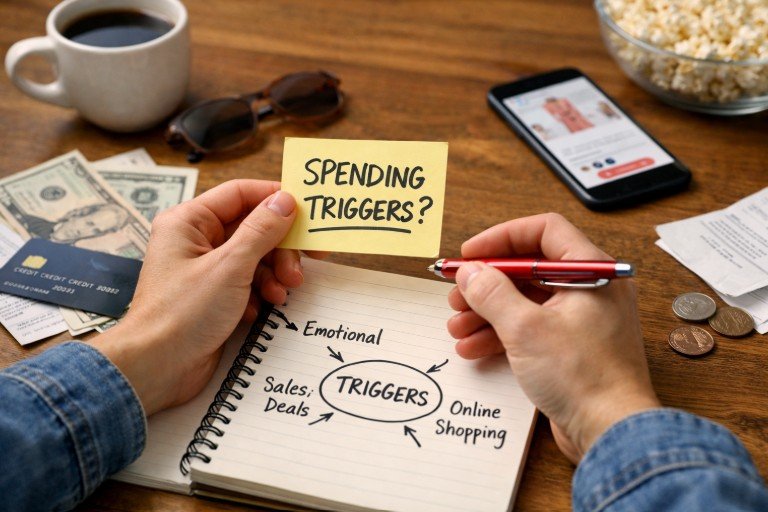
Before you fix your finances, you have to understand your behavior. Most overspending isn’t about math. It’s about emotion. Research on stress spending shows that people often use purchases as short-term mood boosters. That rush feels good. The regret comes later.
Here are the most common impulse buying triggers:
- Emotional states: Stress after work. Boredom on weekends. Loneliness at night. Shopping becomes a quick dopamine hit.
- Environmental cues: Target runs that turn into $200 carts. Craft fairs. Scrolling TikTok or Instagram. Flash sales in your inbox.
- Social pressure: Group trips. Brunch culture. Fear of missing out. Trying to match a friend’s lifestyle.
If you want emotional spending control, track your patterns for 30 days. Write down what you bought and how you felt before you bought it. This simple exercise reveals more than any budgeting app ever could.
Mindful spending starts with awareness.
Introduce Friction To The Buying Process

Modern payment systems are designed for speed. One click. Face ID. Done. The less you feel the transaction, the easier it becomes to overspend. Behavioral finance research calls this the “cashless effect.” When paying feels painless, spending increases.
If you’re serious about learning how to stop overconsumption habits before they drain your finances, you need friction.
Add small obstacles between you and the purchase:
- Use a 24-hour or 7-day rule for non-essential items.
- Delete saved credit card information from browsers and retail apps.
- Turn off one-click checkout.
- Unsubscribe from promotional emails.
- Switch to cash for categories where you consistently overspend.
That pause disrupts impulse-buying triggers. It forces your logical brain to catch up with your emotional brain.
You’ll be surprised how many “must-have” items lose their urgency after 48 hours.
Build Financial Guardrails That Actually Work

Telling yourself to “spend less” is vague. You need structure. Guardrails create boundaries without making you feel trapped.
Start with low cost business ideas. The 50/30/20 rule works because it’s flexible. Half your income covers needs. Thirty percent goes to wants. Twenty percent supports savings and debt reduction. It’s not perfect. But it’s practical.
Tracking is equally powerful. Keep a spending diary for one month. Every coffee, and app subscription. Every random Amazon purchase. Patterns will emerge. Maybe you overspend on food delivery after long workdays. Maybe online shopping spikes when you’re bored.
Instead of eliminating fun spending entirely, create a fixed “extras” allowance. This protects you from binge cycles. Sustainable money habits are built on balance, not punishment.
And here’s a shift most people overlook: prioritize experiences over objects. Research consistently shows that experiences deliver longer-lasting satisfaction than physical goods. A weekend hiking trip will likely outlast the thrill of a new gadget.
Shift Your Mindset From Wanting To Choosing

Overconsumption thrives on autopilot. Breaking financial habits to break means slowing down.
Before buying, ask yourself:
- Do I need this or just want it?
- What problem does this solve today?
- Will I still value this in six months?
Another powerful technique is calculating cost in hours worked. If something costs $300 and you earn $30 per hour after taxes, that’s 10 hours of your life. Is that item worth an entire workday?
Gratitude also plays a quiet but critical role. When you intentionally notice what you already own, the craving for more softens. Try a “use what you have” challenge for 30 days. Finish products before replacing them. Rotate outfits creatively. Shop your closet before shopping online.
These financial discipline methods rewire how you relate to money.
Replace Consumption With Better Rewards

Overconsumption is rarely about the item itself. It’s about the feeling. Control the feeling, and the spending urge weakens.
If shopping relaxes you, replace it with a walk, a workout class, or a creative hobby. If scrolling leads to spending, remove shopping apps from your phone.
The goal is not restriction. It’s a substitution.
When you build fulfilling routines, controlling spending urges becomes easier. You stop using purchases as emotional regulation.
Frequently Asked Questions
1. How long does it take to break overconsumption habits?
Behavior change varies by person, but most financial habits take at least 30 to 60 days to shift. Consistency matters more than speed. Small daily corrections create lasting change.
2. Is using credit cards always bad for overspending?
Not necessarily. Credit cards offer rewards and protection. The problem arises when they remove the emotional “pain” of paying. If you struggle with impulse buying, switching temporarily to debit or cash can help reset spending awareness.
3. What is mindful spending?
Mindful spending means aligning purchases with your values and long-term goals. It’s intentional decision-making instead of emotional reaction.
4. Can budgeting alone stop overconsumption?
Budgeting helps, but it doesn’t address emotional triggers. Combining structure with mindset shifts and friction strategies creates stronger, sustainable money habits.
Final Thoughts
Learning how to stop overconsumption habits before they drain your finances isn’t about becoming a minimalist overnight. It’s about paying attention. It’s about recognizing the quiet leaks in your financial planning and sealing them intentionally. Small changes compound. A deleted shopping app. A waiting rule. A spending journal. These steps feel minor, but over time, they protect your financial well-being and restore control.
You don’t need perfection.
You need awareness and consistency.