







I didn’t always understand why some bedrooms feel instantly calming, while others, even beautifully decorated ones, feel slightly off. Over time, I realized it wasn’t about how expensive the furniture was or how trendy the decor looked. The difference was in how the room held softness, warmth, and quiet. A bedroom that feels relaxing usually has less visual noise, gentler contrasts, and textures that invite you to slow down.
That’s exactly where cozy and modern bedroom styling ideas meet. Modern keeps the space uncluttered and intentional. Cozy adds warmth, tactility, and emotional comfort. When these two come together thoughtfully, the bedroom stops feeling like a styled display and starts feeling like a personal retreat, a place where your body actually unwinds at the end of the day.
What Makes a Bedroom Feel Cozy Yet Modern
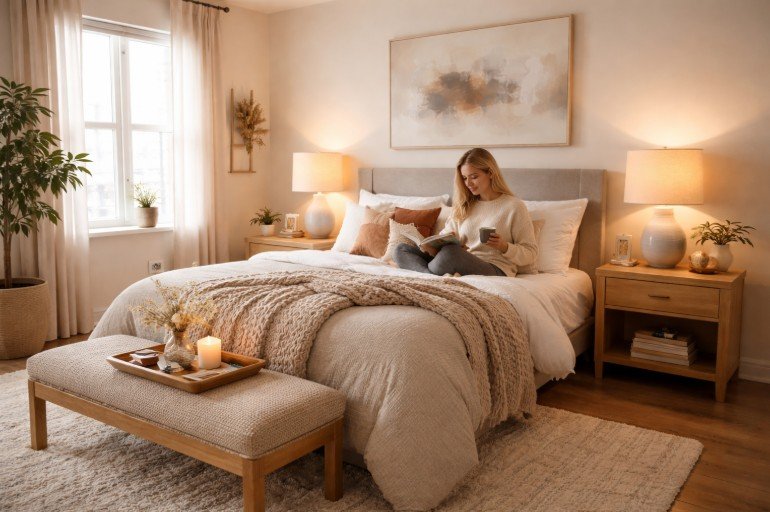
A cozy modern bedroom isn’t filled with decor. It’s shaped by restraint and softness working together. Clean lines keep the room breathable, while warm materials and layered surfaces prevent it from feeling stark. The balance is subtle, too minimal, and it feels cold, too layered, and it feels heavy.
The most relaxing bedrooms usually share a few underlying qualities: gentle contrast, warm neutrals, tactile materials, and calm visual spacing. You notice upholstered surfaces instead of sharp edges, diffused light instead of harsh brightness, and fabrics that absorb sound rather than reflect it. These details quietly change how a room feels without drawing attention to themselves.
Layering Textures for Instant Warmth

Texture is often what separates a styled bedroom from a comfortable one. Flat surfaces and smooth finishes can look modern, but without softness, they don’t feel restful. Layering textiles introduces depth and physical comfort at the same time.
Start with breathable, high-quality bedding like cotton or linen. Then add a heavier layer, a knit throw, a quilt, or a textured blanket to create weight and warmth. Pillows in varied fabrics such as boucle, velvet, or woven cotton bring tactile contrast without clutter. Even a subtle upholstered headboard can shift the entire mood of the room, making the bed feel more grounded and inviting.
The goal isn’t abundance. It’s a variation. When textures differ but stay within a calm palette, the room feels rich without feeling busy.
Lighting That Softens the Entire Room
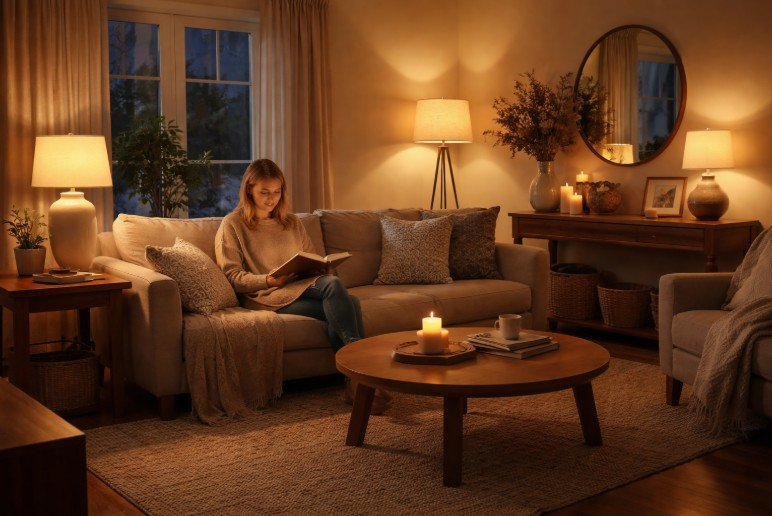
Lighting has an outsized effect on how relaxing a bedroom feels. Overhead lighting alone often creates sharp shadows and visual tension, which the brain reads as alertness rather than rest. Layered lighting, on the other hand, mimics natural evening light, warmer, lower, and more diffused.
Bedside lamps with soft shades, wall sconces near the headboard, and subtle accent lighting behind or beneath furniture create gentle illumination zones. This layered approach allows the room to shift gradually from functional brightness to evening calm. Warm bulbs and dimmable fixtures further reduce contrast, making surfaces and colors appear softer at night.
When light feels indirect and enveloping rather than pointed, the entire bedroom takes on a quieter mood.
Colors That Quiet the Space
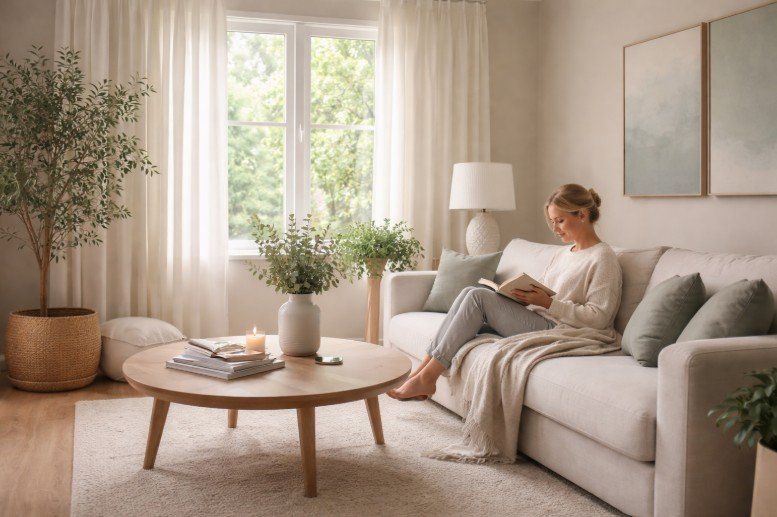
Color strongly influences emotional tone, especially in a bedroom. Stark whites and high-contrast palettes can feel crisp but rarely feel restful. Softer, warmer neutrals absorb light instead of reflecting it sharply, which visually settles the room.
Shades like warm beige, muted sage, clay-tinted blush, and gentle taupe create a grounded atmosphere without looking dark. These tones also complement natural materials such as wood, linen, and rattan, reinforcing a cohesive, modern, cozy aesthetic. Even small color shifts like choosing warm white instead of cool white can noticeably reduce visual tension.
A calm palette doesn’t mean monotone. Subtle tonal variation within similar hues keeps the room layered while preserving its quiet character.
Furniture That Supports Relaxation
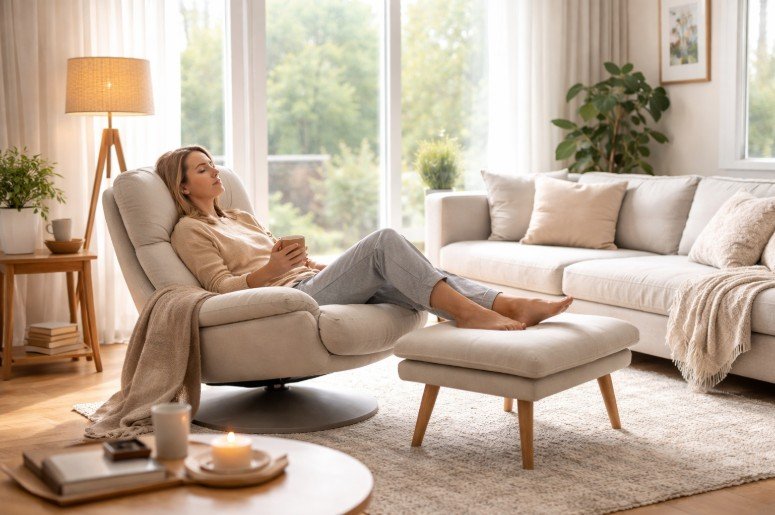
Furniture choices affect not just layout but emotional comfort. Bedrooms feel calmer when furniture appears visually light yet physically soft. Upholstered headboards, rounded edges, and low-profile silhouettes reduce visual hardness, helping the room feel more intimate.
Minimalist storage also plays a major role. Floating nightstands or handle-less wardrobes keep surfaces clean and uninterrupted, which lowers visual clutter. The same philosophy applies to other parts of daily life too, including clothing, where approaches like building a capsule wardrobe on a budget focus on fewer, more intentional pieces rather than overflowing storage.
If space allows, a small reading corner, even a compact armchair with a soft lamp, creates a secondary relaxation zone. This subtle layering of function reinforces the bedroom as a place to slow down, not just sleep.
Natural Elements That Make a Bedroom Feel Alive
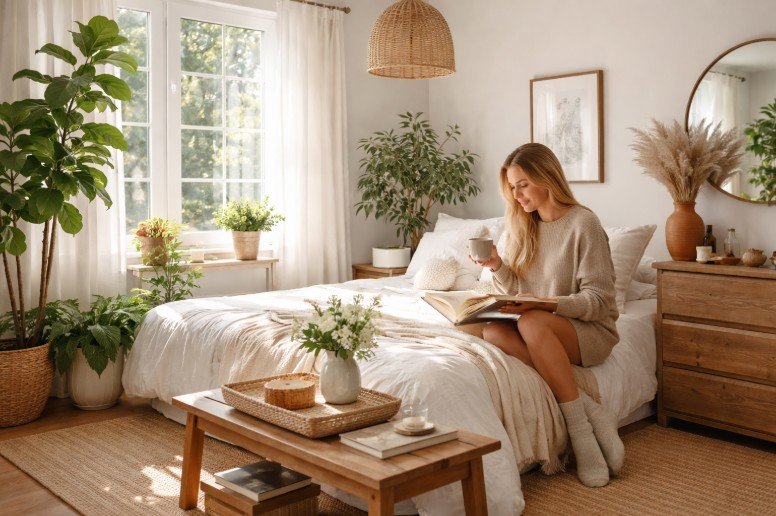
Nature-derived materials bring warmth that synthetic finishes often lack. Wood grain, woven cane, linen, and stone introduce organic variation that softens modern lines. These textures also reflect light irregularly, which reduces glare and adds visual depth.
Indoor plants contribute more than decoration. Their presence introduces movement, softness, and a sense of care into the room. Even a single leafy plant near a window or bedside surface can shift the atmosphere toward calm. Natural materials and greenery together create the quiet, grounded feeling often associated with sanctuary-like interiors.
When modern structure meets organic detail, the bedroom feels balanced rather than styled.
Practical Cozy Modern Bedroom Styling Tips
- Keep surfaces intentionally sparse rather than empty
- Mix soft textiles within one calm color family
- Use multiple low, warm light sources instead of one bright light
- Choose rounded or upholstered elements where possible
- Let natural materials contrast with smooth finishes
- Maintain hidden storage to reduce visual noise
FAQs
1. How do I make my bedroom look cozy but still modern?
Focus on warm neutrals, layered textiles, and soft lighting while keeping furniture lines simple. Modern structure with tactile materials creates a cozy modern balance without clutter.
2. What colors make a bedroom feel more relaxing?
Muted, warm-toned shades like sage green, warm beige, clay blush, and soft taupe tend to feel calmer than stark white or high-contrast palettes because they soften light and reduce visual tension.
3. Is layered bedding necessary for a cozy bedroom?
Layered bedding adds both physical comfort and visual depth. Even minimal layers, breathable sheets, a textured blanket, and varied pillows make a bed feel warmer and more inviting.
4. What furniture makes a bedroom feel calmer?
Upholstered headboards, low-profile beds, floating nightstands, and concealed storage help reduce visual hardness and clutter, which supports a more restful environment.
Final Thoughts
A relaxing bedroom rarely comes from adding more decor. It usually comes from subtracting visual noise and introducing softness where it matters in light, texture, color, and material. Cozy and modern bedroom styling ideas work best when they support how a space feels rather than how it photographs. When the room holds warmth, quiet, and gentle contrast, it naturally becomes a place your mind associates with rest.
Small, thoughtful shifts to softer lighting, warmer tones, and fewer objects often change the atmosphere more than a full redesign.